
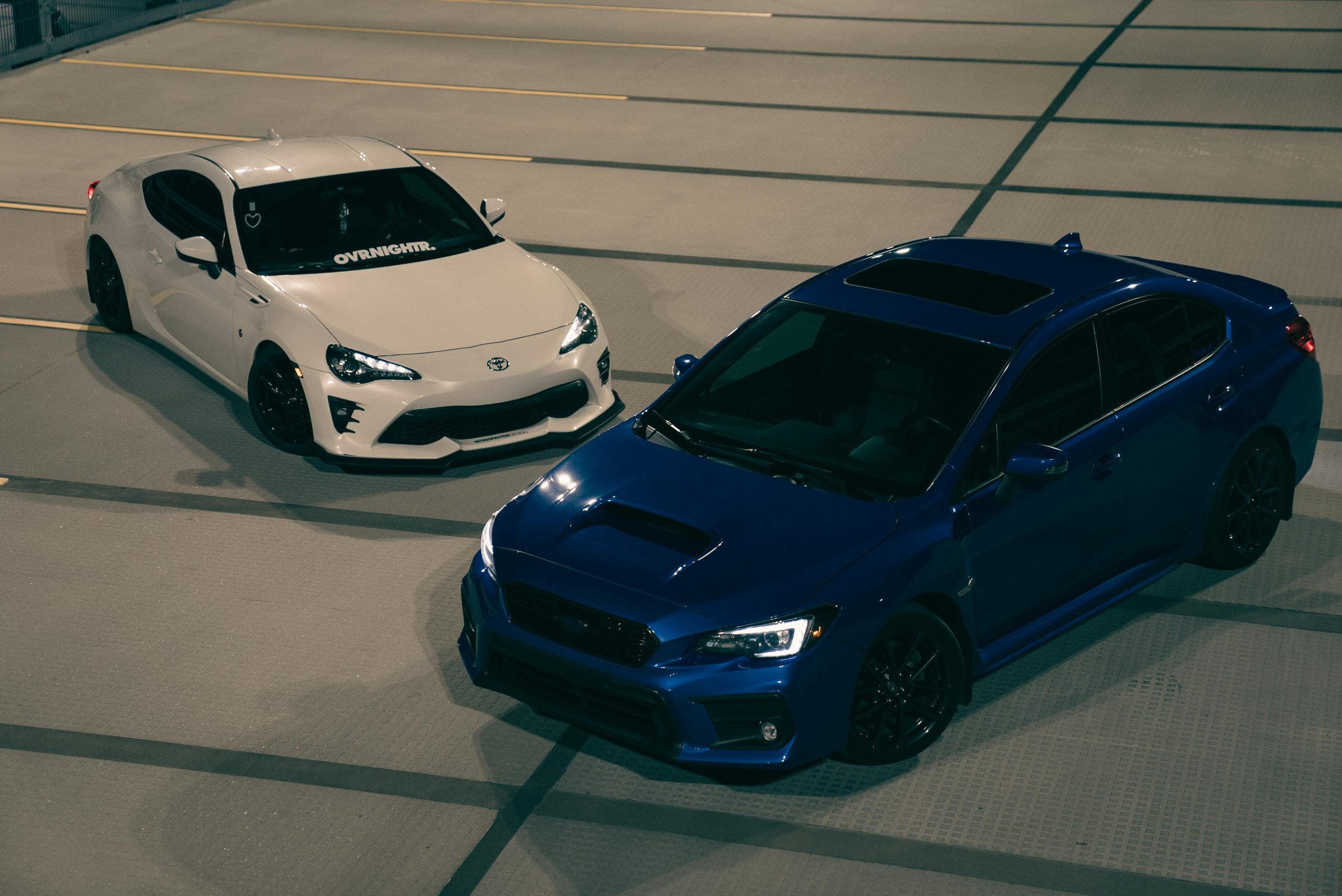
Shopping for a new vehicle around Plymouth Meeting, Pennsylvania, can feel complicated. Do you go with Toyota’s long-standing reputation, or look at Subaru, a brand that’s been climbing in reliability? Both automakers have a loyal fan base, but each manufacturer approaches car-making slightly differently. If you’re curious about how these brands compare, our John Kennedy Subaru Plymouth team has explored price, value, reliability, performance, and more.
Price and Value Considerations
First impressions matter. Toyota often prices its vehicles below Subaru’s sticker prices. If you compare the base RAV4 and Corolla models, their starting prices tend to be a few hundred dollars below those of the comparable Forester and Impreza. That gap narrows once you add all-wheel drive to a Toyota, because front-wheel drive (FWD) is standard on Toyotas, while Subaru offers all-wheel drive (AWD) across its entire lineup.
In a place such as Montgomery County, where a surprise snow squall can occur as early as October, having that extra traction can be worth the cost.
Initial Purchase Price: Subaru vs. Toyota
Across the lineup, you’ll find that Toyota’s entry-level sedans and crossovers start at a slightly lower price. A base Corolla might begin in the low $20,000s, while an Impreza starts in the mid-$20,000s. Upgrading to a Subaru Outback or Ascent puts you in the high-$30,000 range, whereas a similarly equipped Toyota Highlander remains a few thousand dollars less. If your budget is tight, a Toyota may be a more affordable option.
Yet, veteran Subaru owners often see it differently, pointing out that AWD comes standard, ride comfort is better, and cabin noise is minimal. Those qualities matter when you’re commuting each day or ferrying kids to Whitemarsh Township sports practices in March’s slush.
Resale Value: Long-Term Investment
If you plan to keep a car for five years or more, resale value is important. Subaru has built a reputation for high-mileage achievements, especially models such as the Outback that routinely clock over 200,000 miles.
Toyota, for its part, continues to lead many national resale studies. Trucks such as the Tacoma and Tundra are just a couple of Toyota favorites. However, for the everyday driver who isn’t towing trailers, Subaru’s AWD models often command a higher resale value. That’s because in a market like Plymouth Meeting, where a sudden flurry can turn highways into skating rinks, buyers like you view AWD as a necessity rather than a luxury.
Warranty and Maintenance Costs
Both manufacturers offer similar warranties, covering three years or 36,000 miles for bumper-to-bumper protection and five years or 60,000 miles for the powertrain. Maintenance schedules are comparable, too. Both require regular oil and filter changes, brake inspections, and tire rotations. However, budget-minded drivers sometimes find that Toyota’s conventional automatic transmissions require fewer specialty fluids than Subaru’s continuously variable transmission (CVT) units.
Subaru Reliability vs. Toyota
Reliability often tops the list of considerations when shopping. Toyota has long dominated this category, thanks to engineering that generally favors proven parts over cutting-edge technology. However, Subaru’s track record has improved significantly in recent years. For example, the 2025 Forester received a consumer-verified 83/100 from J.D. Power. This earned it the number two spot in the best compact SUVs of 2025 list, edging out manufacturers such as Ford, Mazda, and Honda.
Common Issues and Repairs
Let’s examine some common issues observed on Subaru and Toyota models.
Subaru: Head Gasket Concerns and CVT Transmission
If you’re thinking about a used Subaru from the late ’90s through the early 2000s, you’ve probably heard rumors about head gasket leaks. Those early BOXER engines were prone to developing seal failures between 90,000 and 150,000 miles. Fortunately, Subaru addressed most of these issues by refining the gasket materials and tightening assembly tolerances in later generations. Still, if you’re shopping for pre-2012 models, have a mechanic inspect for coolant or oil traces around the engine block.
Today, many Subaru owners’ biggest maintenance question centers on the CVT. Fluid breakdown from local stop-and-go traffic could accelerate wear in older models. Changing CVT fluid every 30,000 miles, rather than the original 50,000-mile interval, and switching to synthetic fluid helps it hold up better in city driving conditions.
Toyota: Brake and Oil Usage Problems
Toyota’s record isn’t immaculate. Some V-6 Camrys from the early 2010s experienced transmission issues, although those models are becoming increasingly scarce in the used-car market. Some Toyota drivers have reported higher-than-expected brake pad wear, particularly on models that combine highway and city driving. A few 2.0-liter models from 2007 to 2013 also exhibited oil-consumption quirks, so checking service records for regular oil changes is wise when test-driving any Corolla or RAV4 with around 100,000 miles.
Performance and Innovation
Toyota has focused on hybrids, refining the system that debuted in the Prius back in the early 2000s. Today’s RAV4 Hybrid and Corolla Hybrid deliver great fuel numbers. Although Subaru’s hybrid offerings are relatively new to the lineup, they’ve adopted many of Toyota’s ideas through their collaborations.
Subaru’s BOXER engine sits low in the chassis, lowering the car’s center of gravity and lending a bit more confidence in corners. Combined with Subaru’s standard symmetrical AWD, it creates a package that feels glued to the road in wet or snowy conditions. Toyota’s hybrid setup remains the industry gold standard. If you have a long commute on the Blue Route, a RAV4 Hybrid or Prius can deliver real savings at the pump.
Test-Drive a Subaru at John Kennedy Subaru Plymouth Today
Toyota offers lower base prices and a proven hybrid system; Subaru asks a little more but rewards you with standard all-wheel drive, a BOXER engine with unique handling traits, and a recent surge in reliability scores. In Plymouth Meeting’s unique blend of suburban calm and urban areas, it just might be Subaru’s all-terrain confidence that tips the scales for you. Why not schedule a test-drive today? Our knowledgeable staff is looking forward to showing you our Subarus. Contact one of our John Kennedy Subaru team members to see the whole lineup.
Connect with us


- July 2026
- June 2026
- April 2026
- March 2026
- February 2026
- January 2026
- December 2025
- November 2025
- October 2025
- September 2025
- August 2025
- July 2025
- June 2025
- May 2025
- April 2025
- March 2025
- February 2025
- January 2025
- December 2024
- November 2024
- October 2024
- September 2024
- August 2024
- April 2024
- March 2024
- February 2024
Archives