

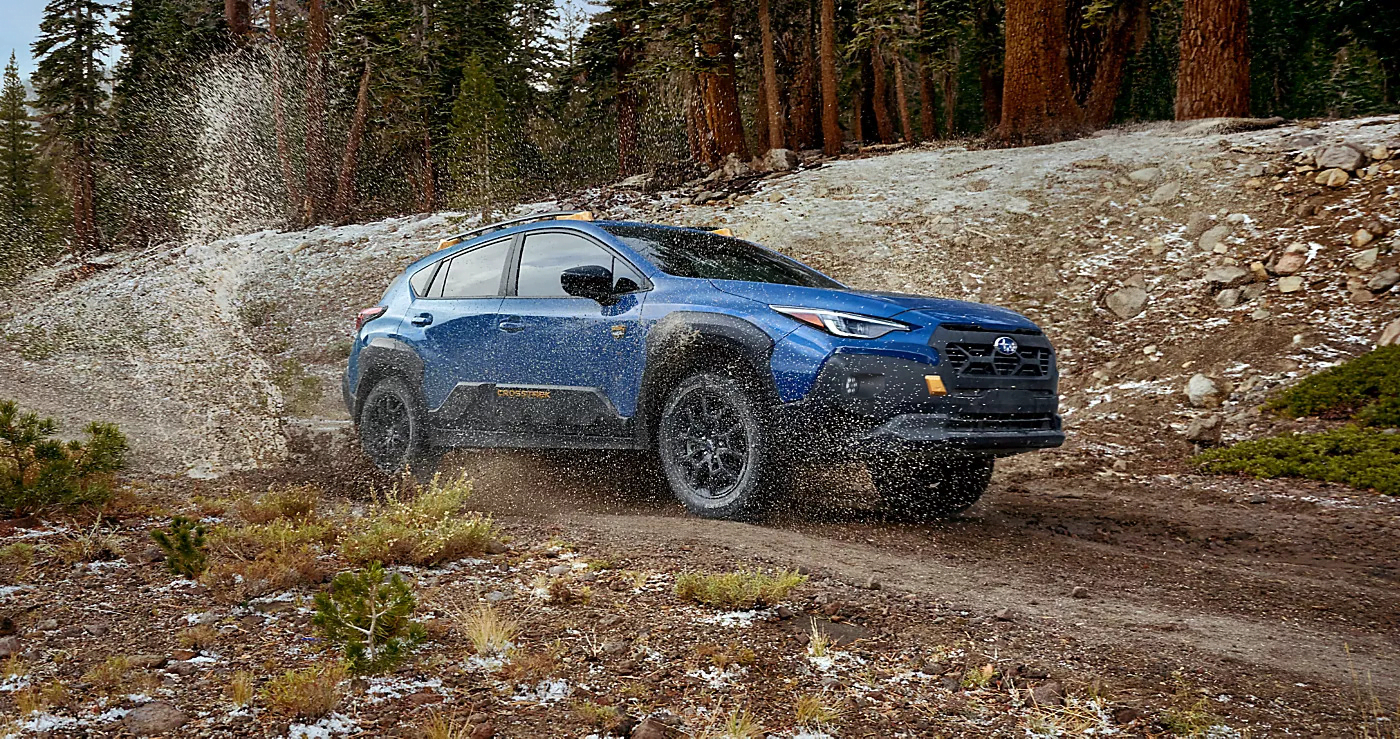
The Subaru Sport vs Wilderness decision really boils down to one question: where do you actually drive? At John Kennedy Subaru, we help Plymouth Meeting buyers navigate this choice every day. Sport gives you aggressive styling and sharper handling, prioritizing pavement performance with occasional off-road capability. Wilderness brings serious trail credentials with increased ground clearance, protective armor, and all-terrain tires for those who consider dirt roads the main attraction.
Both share Subaru’s Symmetrical All-Wheel Drive and EyeSight safety technology, but they differ dramatically in capability and purpose. Let’s dig into what separates these trims and help you figure out which one matches your driving reality.
What Defines the Subaru Sport Trim?
Sport answers a pretty straightforward question: why can’t your adventure vehicle look aggressive downtown and still handle weekend excursions? These trims inject some real personality into Subaru’s practical foundation through visual upgrades and performance tweaks that actually matter.
The look starts with gloss black trim replacing chrome, darker wheel finishes, and contrast stitching throughout the cabin. Body-colored mirrors and door handles keep things visually clean. Inside, you get water-repellent seat materials with contrast stitching that combines function with style. Dashboard trim uses textures and finishes that actually distinguish Sport from base models, rather than just slapping on a badge.
Performance tweaks back up the looks. Sport-tuned suspension cuts body roll and sharpens pavement handling while maintaining daily comfort. Steering gives you better feedback for precise vehicle placement through tight spots or winding roads. Sport positions itself perfectly for drivers who live primarily on asphalt but refuse to compromise when gravel shows up.
What Sets the Wilderness Trim Apart?
Wilderness takes the complete opposite approach. These represent Subaru’s most capable off-road machines, built specifically for serious trail work. The raised stance hits you immediately, broadcasting capability before you even turn the wheels. Unique bumpers provide extra protection, copper accents create visual consistency across the Wilderness family, and standard roof rails accommodate adventure gear without looking like aftermarket add-ons.
Every design element actually serves functional purposes here. Factory-fitted all-terrain tires deliver aggressive tread patterns for loose dirt, mud, and snow. Additional underbody armor protects vital components from rock strikes. Heavy-duty cladding and reinforced mounting points embrace durability throughout the build.
Inside, StarTex water-repellent upholstery with copper stitching keeps wet gear and muddy dogs from causing permanent damage. Easy-clean surfaces acknowledge that real adventure gets messy. Rubber floor mats with deep channels trap dirt and water, while cargo liners protect against whatever you’re hauling back from the backcountry.
Wilderness specifications focus on numbers that actually matter when pavement ends. Ground clearance jumps significantly compared to standard trims, enabling greater obstacle clearance. Better approach and departure angles allow steeper climbs and descents without contacting the bumpers. These measurements translate directly to which trails you can tackle confidently.
Performance and Off-Road Capability Compared
Engine Power and Drivetrain Differences
Both Sport and Wilderness share Subaru’s 2.5-liter Boxer engine producing 180 horsepower and 178 lb-ft of torque, paired with a CVT featuring manual mode. Symmetrical All-Wheel Drive comes standard, continuously monitoring for slippage and distributing power where it’s needed.
Here’s where things get interesting, though. Wilderness receives transmission tuning optimized for low-speed precision on challenging terrain, while Sport tuning emphasizes responsive acceleration for street situations. Both include X-MODE Dual Mode System with Hill Descent Control, featuring dedicated settings for snow/dirt and deep snow/mud conditions. This system adjusts throttle response, transmission behavior, and torque distribution to maximize grip in difficult situations. Wilderness receives additional suspension tuning, a shorter final drive ratio, and an upgraded transmission cooler specifically optimized for trail work, giving it a meaningful edge over Sport in the most demanding off-road scenarios.
If you’re regularly tackling challenging terrain, such as unmaintained forest roads or steep grades with loose rock, Wilderness tuning delivers measurable benefits. For occasional gravel roads and winter weather, Sport capability proves more than sufficient.
Ground Clearance, Suspension, and Trail-Ready Features
Ground clearance separates weekend warriors from serious trail runners. Here’s how Sport and Wilderness stack up across critical off-road specifications:
| Feature | Sport Trim | Wilderness Trim |
| Ground Clearance | 8.7 inches | 9.3 inches |
| Wheels/Tires | 19-inch dark metallic alloys | 17-inch matte-black with Yokohama Geolandar all-terrain tires |
| Suspension | Standard | Longer springs/dampers, fully independent |
| Approach Angle | 19.0 degrees (Forester Sport) | 23.5 degrees (Forester Wilderness) |
| Departure Angle | 24.6 degrees (Forester Sport) | 25.5 degrees (Forester Wilderness) |
| X-MODE | Dual Mode System (Snow/Dirt, Deep Snow/Mud | Dual Mode System (Snow/Dirt, Deep Snow/Mud) + faster-engaging center differential lockup |
That 0.6-inch clearance advantage matters when you’re navigating heavily rutted dirt roads or rocky trails. Combined with better approach and departure angles, Wilderness models clear obstacles that would stop Sport trims or risk expensive underbody damage.
Suspension philosophy reveals the core differences between these trims. Sport suspensions use stiffer springs and retuned shocks to reduce body roll and sharpen cornering on pavement. Wilderness suspensions prioritize wheel travel and articulation to maintain traction over uneven terrain, with softer springs that absorb impacts without bottoming out. The trade-off shows up in cornering, where Wilderness exhibits more body lean than Sport on smooth roads.
Trail equipment further separates these trims. Wilderness models pack aluminum skid plates protecting the engine, transmission, and fuel tank from rock strikes. Sport trims rely on standard protection that’s adequate for pavement and maintained gravel but lacks extra armor. Wilderness all-terrain tires grip surfaces where Sport’s all-season tires reach their limits, with deeper treads biting into mud, sand, and snow.
Interior Design, Comfort, and Technology
Cabin Materials and Styling
Sport cabins showcase engagement-focused details that actually make a difference. Orange contrast stitching appears on seats, door panels, and the steering wheel. Seat bolsters provide extra support during aggressive driving while maintaining long-distance comfort. Soft surfaces appear where hands and arms naturally contact, with durable materials handling high-wear zones.
Wilderness embraces its utilitarian mission through StarTex upholstery that resists water, mud, and the chaos of the outdoors. Copper accent stitching ties back to exterior design elements. Aggressive rubber floor mats effectively trap dirt and moisture. Despite the durability focus, seats remain supportive for long drives with generous padding. Heated front seats come standard, which you’ll appreciate during cold Pennsylvania mornings. Both trims prioritize visibility through large glass and thin pillars, reducing blind spots.
Infotainment and Driver-Assist Features
Both Sport and Wilderness come standard with Subaru’s 11.6-inch multimedia touchscreen. Apple CarPlay and Android Auto come standard across the board. Wilderness sometimes includes off-road specific displays showing pitch and roll angles, X-MODE engagement status, and power distribution visualization.
EyeSight driver-assist technology comes standard on both, including pre-collision braking, adaptive cruise control, lane departure warning, lane keep assist, and automatic high beams. Wilderness includes standard Reverse Automatic Braking (it’s optional on Sport). Remote services through smartphone apps allow engine start, door lock/unlock, and vehicle status checks.
Pricing and Overall Value: Sport vs Wilderness
Browse our Wilderness inventory at John Kennedy Subaru to see current pricing, but here’s what separates these trims financially. The Sport has a higher MSRP than the base trims, while the Wilderness commands an even higher premium. That difference buys you genuine hardware: increased ground clearance, enhanced suspension, protective underbody shields, and all-terrain tires.
Sport positions itself as a value play for style-conscious buyers seeking distinctive appearance and improved handling without a substantial premium over base models. Wilderness reflects its position as Subaru’s off-road flagship, trading luxury features for capability. The investment makes sense if trails are a major part of your lifestyle.
Both hold resale value well thanks to Subaru’s reliability reputation. Insurance costs, fuel economy, and maintenance expenses remain similar since both use identical engines and transmissions. Wilderness might see marginally higher insurance premiums due to unique component replacement costs, but differences rarely prove significant.
Which Subaru Trim Is Right for Your Plymouth Meeting Lifestyle?
Your local context really matters here. Plymouth Meeting offers access to urban amenities and natural spaces, creating competing demands for vehicles. Daily commutes down Ridge Pike don’t require serious off-road capability, but weekend trips to Valley Forge National Historical Park or Wissahickon Valley introduce different variables.
Sport thrives where pavement dominates, but capability stays essential. Daily drives, shopping runs to King of Prussia, and occasional ventures to less-maintained park access areas suit Sport perfectly. Improved handling enhances highway merging and city navigation without sacrificing all-weather confidence.
Wilderness calls to drivers who view Southeastern Pennsylvania as a base camp rather than a destination. If weekends regularly involve hiking on trails throughout Pennsylvania state forests, camping in unmaintained areas, or remote fishing spots, Wilderness capability becomes a practical necessity. The easy-clean surfaces and robust cargo management accommodate muddy gear and outdoor equipment without complaint.
Pennsylvania winters deliver snow, ice, and salt; both trims handle them confidently. Wilderness’s additional clearance allows it to navigate snow-filled parking lots and unplowed roads more effectively, while aggressive tires bite through slush. Sport remains winter-capable but operates closer to limits in extreme conditions.
Test Drive Sport and Wilderness Models at John Kennedy Subaru
Reading comparisons help, but nothing replaces actual seat time. At our Plymouth Meeting location, you can experience both trims back-to-back, making the differences tangible. Feel how the Sport handling responds during spirited cornering. Notice Wilderness’s commanding view and confident stance.
Our dealership has served this community for over 60 years, and we understand local needs (whether you’re navigating Philadelphia traffic or exploring the trails of Wharton State Forest). We help match vehicles to lifestyles rather than pushing the highest-margin models.
Test both trims in different conditions. Take Sport on twisty roads to assess handling improvements. Find rough but legal paths for Wilderness testing to verify whether the capability justifies the premium. Pay attention to visibility, seating comfort, and control placement during drives lasting more than 20 minutes. Contact our team at 844-709-4104 to schedule test drives. Experiencing Sport and Wilderness firsthand transforms specifications into confident decisions. Whether you choose street-ready Sport or trail-focused Wilderness, you’re selecting a Subaru engineered for your specific version of adventure.
Connect with us


- July 2026
- June 2026
- April 2026
- March 2026
- February 2026
- January 2026
- December 2025
- November 2025
- October 2025
- September 2025
- August 2025
- July 2025
- June 2025
- May 2025
- April 2025
- March 2025
- February 2025
- January 2025
- December 2024
- November 2024
- October 2024
- September 2024
- August 2024
- April 2024
- March 2024
- February 2024
Archives