

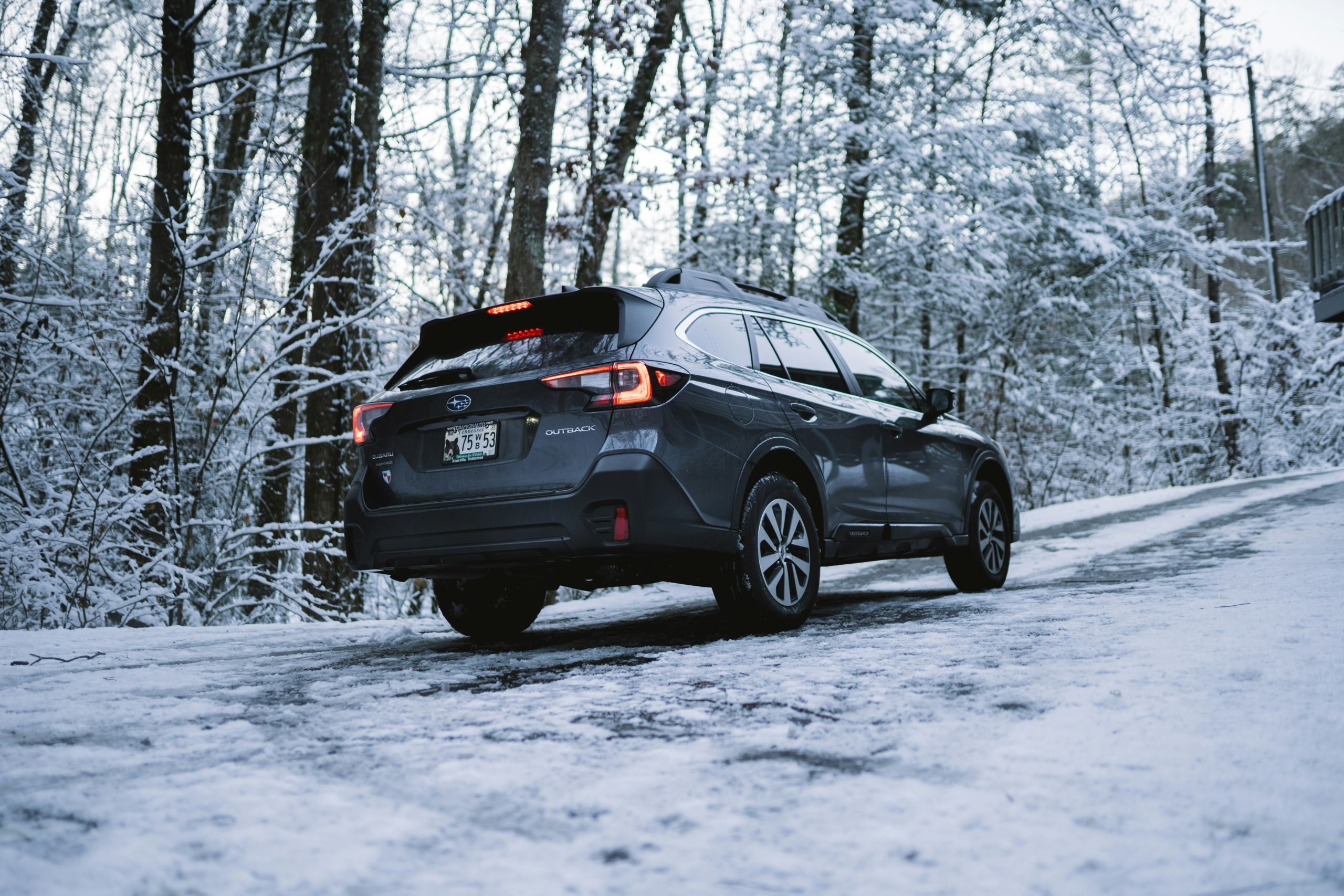
Subaru presents two exceptional compact SUV choices. The wagon-inspired Outback and the more traditional Forester both feature the brand’s signature dependability and all-wheel-drive capability, yet appeal to different driver tastes. The Outback, with its smooth outline and car-like control, first appeared in 1994. The Forester, introduced in 1997, features an angular shape and tall posture.
Deciding which of these SUVs best fits your lifestyle depends on factors such as whether you need lots of storage room or want to handle tough terrain. We’ll examine their design, inside space, power, tech, safety tools, and cost to assist you in making your choice so that one of these SUVs can join you on your next trip, whether it’s on flat roads or hard off-road paths in Plymouth Meeting, Pennsylvania.
Exterior Design
When it comes to exterior aesthetics, the Outback and Forester each carve their own distinct path. The former, at 191.9 inches long, 74.2 inches wide, and 66.1 inches tall, shows off a wagon-like shape with a smooth roofline. Its long 108.1-inch wheelbase makes for a comfy ride and spacious interior. The latter, on the other hand, looks more like a classic SUV. It’s 68.1 inches tall, 182.7 inches long, and 71.5 inches wide. Both models sit 8.7 inches off the ground, but Wilderness variants go even higher (9.5 inches for the Outback and 9.2 inches for the Forester).
The wagon-inspired Outback combines car-like grace with SUV usefulness, featuring roof rails with built-in crossbars and an optional power liftgate. The compact Forester’s angular shape and large windows provide excellent visibility, complemented by an optional panoramic moonroof or athletic roof spoiler. These different styles mean you can pick a Subaru that fits your taste, whether you want the wagon-inspired mix of looks or the bolder SUV presence.
Interior Comfort and Space
The interior of both SUVs caters to diverse needs while maintaining spacious configurations. The base Forester takes the lead with 111.6 cubic feet of passenger space. Its companion model provides 109.0 cubic feet, dropping to 107.5 with a moonroof. Yet, the versatile Outback wins in cargo room. It features 32.6 cubic feet behind the back seats and 75.6 cubic feet when folded, beating the Forester’s 28.9 and 74.2 cubic feet.
Both vehicles offer ample rear legroom, with the Outback providing 39.5 inches and the Forester closely following at 39.4 inches. Taller folks may favor the Forester, which offers 41.2 inches of front headroom or 40.2 with a moonroof. The Outback gives 40.1 inches, which decreases to 39.1 with a moonroof.
Tech fans might prefer the Outback’s optional 11.6-inch touch-screen system. This feature is much larger than the Forester’s biggest 8.0-inch screen. For a touch of luxury, the Outback offers Nappa leather seats. The Forester, focusing on usefulness, has a higher seating position. This design choice gives drivers a clear view of the road and their environment.
Performance and Handling
Subaru’s Outback and Forester offer unique driving experiences. While the Outback offers two engine choices — a 2.5L four-cylinder producing 182 horsepower and a robust 2.4L turbo generating 260 horsepower — the only option with the Forester is a 2.5L four-cylinder engine that delivers182 horsepower. This difference in power shows up in how fast the vehicles can go. The turbo model speeds from zero to 60 mph in 6.1 seconds. The basic versions take longer, at 8.6 and 8.1 seconds.
Regarding fuel efficiency, these SUVs deliver almost identical performance. Both achieve up to 26 mpg in urban settings, while the Outback gets 32 mpg and the Forester 33 mpg on open roads. The larger SUV shines when it comes to towing. It can pull 2,700 pounds, or 3,500 with the turbo engine. Its companion model can tow 1,500 pounds, with its Wilderness version able to handle 3,000 pounds. Subaru’s well-known Symmetrical All-Wheel Drive configuration is standard on both automobiles. The Outback’s longer wheelbase contributes to a smoother ride, whereas the Forester’s compact size enhances maneuverability in congested urban environments.
Technology and Features
Equipped with state-of-the-art technology, the Outback and Forester showcase Subaru’s commitment to innovation. The former features an 11.6-inch vertical touch screen, which gives drivers a big, clear view of the infotainment system. Though smaller, the latter’s 8.0-inch touch screen is still easy to use. Each vehicle works well with Apple CarPlay and Android Auto, so you can use your phone’s apps on the car’s screen. These features make driving more fun and less stressful.
If you love music, you might like the Harman Kardon sound systems you can add to either vehicle. Both can also connect to the internet with 4G LTE Wi-Fi. While the bigger screen might catch your eye, both automobiles pack in lots of useful tech.
Safety Ratings and Features
The Outback and Forester stand out in safety. The 2023 model of the former earned the Insurance Institute for Highway Safety’s Top Safety Pick+ award, while the latter obtained the Top Safety Pick honor. Both SUVs got five-star overall safety ratings from the National Highway Traffic Safety Administration. These ratings prove their solid crash protection. The standard EyeSight system adds advanced features to these vehicles. It includes pre-collision braking, lane departure warning, and adaptive cruise control with lane centering.
These models offer optional blind-spot detection and rear cross-traffic alert to boost your road awareness. The Outback’s DriverFocus Distraction Mitigation System is available on more trim levels than the Forester, which only has it on the Touring trim. At the core of these models is Subaru’s Ring-Shaped Reinforcement Frame, which offers improved crash energy absorption.
Pricing and Trim Levels
While the 2024 Subaru Outback’s MSRP starts at $30,240, its relative, the Forester, begins at a slightly lower price point of $28,440. These vehicles offer various versions to suit different needs and budgets, with the Outback lineup featuring Base, Premium, Onyx Edition, Limited, Touring, Onyx Edition XT, Limited XT, Touring XT, and Wilderness trims. Prices span from $30,240 to $44,140. The Forester follows suit, offering Base, Premium, Sport, Limited, Touring, and Wilderness options. Its price range stretches from $28,440 to $38,740.
Experience Your Perfect Subaru at John Kennedy Subaru Plymouth
Both models offer distinctive benefits. While the Outback boasts a wagon-like design providing generous space for gear, the Forester features a traditional SUV look with excellent all-around visibility. Our staff at John Kennedy Subaru Plymouth knows these automobiles inside and out. We’re ready to show you what makes them stand out. You can check out the Outback up close or test-drive the Forester. Give us a call at 484-540-2457, or contact us today to set up your own test drive.
Connect with us


- July 2026
- June 2026
- April 2026
- March 2026
- February 2026
- January 2026
- December 2025
- November 2025
- October 2025
- September 2025
- August 2025
- July 2025
- June 2025
- May 2025
- April 2025
- March 2025
- February 2025
- January 2025
- December 2024
- November 2024
- October 2024
- September 2024
- August 2024
- April 2024
- March 2024
- February 2024
Archives