Sales: 610-278-5000 Service: 610-278-5000 Parts: 610-239-2945 | |
Blog / Brand vs. Brand

Subaru vs. Toyota Reliability: Which Is the Better Value?

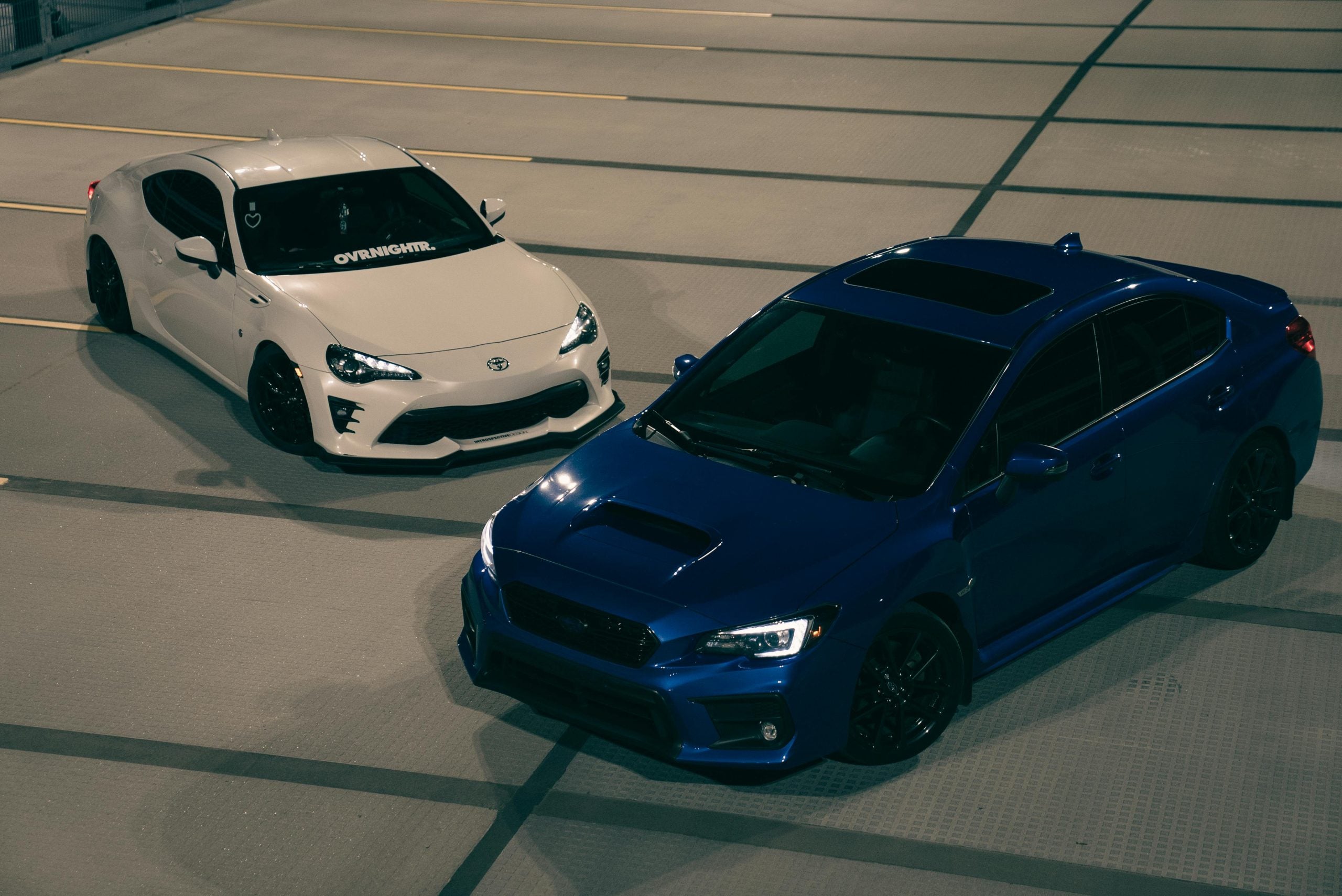
Nighttime Display of Blue and White Sports Cars

Shopping for a new vehicle around Plymouth Meeting, Pennsylvania, can feel complicated. Do you go with Toyota's long-standing reputation, or look at Subaru, a brand that's been climbing in reliability? Both automakers have a loyal fan base, but each manufacturer approaches car-making slightly differently. If you're curious about how these brands compare, our John Kennedy Subaru Plymouth team has explored price, value, reliability, performance, and more.

Price and Value Considerations

First impressions matter. Toyota often prices its vehicles below Subaru's sticker prices. If you compare the base RAV4 and Corolla models, their starting prices tend to be a few hundred dollars below those of the comparable Forester and Impreza. That gap narrows once you add all-wheel drive to a Toyota, because front-wheel drive (FWD) is standard on Toyotas, while Subaru offers all-wheel drive (AWD) across its entire lineup.

In a place such as Montgomery County, where a surprise snow squall can occur as early as October, having that extra traction can be worth the cost.

Initial Purchase Price: Subaru vs. Toyota

Across the lineup, you'll find that Toyota's entry-level sedans and crossovers start at a slightly lower price. A base Corolla might begin in the low $20,000s, while an Impreza starts in the mid-$20,000s. Upgrading to a Subaru Outback or Ascent puts you in the high-$30,000 range, whereas a similarly equipped Toyota Highlander remains a few thousand dollars less. If your budget is tight, a Toyota may be a more affordable option.

Yet, veteran Subaru owners often see it differently, pointing out that AWD comes standard, ride comfort is better, and cabin noise is minimal. Those qualities matter when you're commuting each day or ferrying kids to Whitemarsh Township sports practices in March's slush.

Resale Value: Long-Term Investment

If you plan to keep a car for five years or more, resale value is important. Subaru has built a reputation for high-mileage achievements, especially models such as the Outback that routinely clock over 200,000 miles.

Toyota, for its part, continues to lead many national resale studies. Trucks such as the Tacoma and Tundra are just a couple of Toyota favorites. However, for the everyday driver who isn't towing trailers, Subaru's AWD models often command a higher resale value. That's because in a market like Plymouth Meeting, where a sudden flurry can turn highways into skating rinks, buyers like you view AWD as a necessity rather than a luxury.

Warranty and Maintenance Costs

Both manufacturers offer similar warranties, covering three years or 36,000 miles for bumper-to-bumper protection and five years or 60,000 miles for the powertrain. Maintenance schedules are comparable, too. Both require regular oil and filter changes, brake inspections, and tire rotations. However, budget-minded drivers sometimes find that Toyota's conventional automatic transmissions require fewer specialty fluids than Subaru's continuously variable transmission (CVT) units.

Subaru Reliability vs. Toyota

Reliability often tops the list of considerations when shopping. Toyota has long dominated this category, thanks to engineering that generally favors proven parts over cutting-edge technology. However, Subaru's track record has improved significantly in recent years. For example, the 2025 Forester received a consumer-verified 83/100 from J.D. Power. This earned it the number two spot in the best compact SUVs of 2025 list, edging out manufacturers such as Ford, Mazda, and Honda.

Common Issues and Repairs

Let's examine some common issues observed on Subaru and Toyota models.

Subaru: Head Gasket Concerns and CVT Transmission

If you're thinking about a used Subaru from the late '90s through the early 2000s, you've probably heard rumors about head gasket leaks. Those early BOXER engines were prone to developing seal failures between 90,000 and 150,000 miles. Fortunately, Subaru addressed most of these issues by refining the gasket materials and tightening assembly tolerances in later generations. Still, if you're shopping for pre-2012 models, have a mechanic inspect for coolant or oil traces around the engine block.

Today, many Subaru owners' biggest maintenance question centers on the CVT. Fluid breakdown from local stop-and-go traffic could accelerate wear in older models. Changing CVT fluid every 30,000 miles, rather than the original 50,000-mile interval, and switching to synthetic fluid helps it hold up better in city driving conditions.

Toyota: Brake and Oil Usage Problems

Toyota's record isn't immaculate. Some V-6 Camrys from the early 2010s experienced transmission issues, although those models are becoming increasingly scarce in the used-car market. Some Toyota drivers have reported higher-than-expected brake pad wear, particularly on models that combine highway and city driving. A few 2.0-liter models from 2007 to 2013 also exhibited oil-consumption quirks, so checking service records for regular oil changes is wise when test-driving any Corolla or RAV4 with around 100,000 miles.

Performance and Innovation

Toyota has focused on hybrids, refining the system that debuted in the Prius back in the early 2000s. Today's RAV4 Hybrid and Corolla Hybrid deliver great fuel numbers. Although Subaru's hybrid offerings are relatively new to the lineup, they've adopted many of Toyota's ideas through their collaborations.

Subaru's BOXER engine sits low in the chassis, lowering the car's center of gravity and lending a bit more confidence in corners. Combined with Subaru's standard symmetrical AWD, it creates a package that feels glued to the road in wet or snowy conditions. Toyota's hybrid setup remains the industry gold standard. If you have a long commute on the Blue Route, a RAV4 Hybrid or Prius can deliver real savings at the pump.

Test-Drive a Subaru at John Kennedy Subaru Plymouth Today

Toyota offers lower base prices and a proven hybrid system; Subaru asks a little more but rewards you with standard all-wheel drive, a BOXER engine with unique handling traits, and a recent surge in reliability scores. In Plymouth Meeting's unique blend of suburban calm and urban areas, it just might be Subaru's all-terrain confidence that tips the scales for you. Why not schedule a test-drive today? Our knowledgeable staff is looking forward to showing you our Subarus. Contact one of our John Kennedy Subaru team members to see the whole lineup.
Posted in:

Related Posts

Close up of Subaru Emblem on Livery

Subaru vs. Honda Reliability: Which is the Better Choice?

When it comes to reliability in the automotive world, few brands spark as much debate as Subaru and Honda. Both manufacturers have built solid reputations for durability, but how do they stack up against each other? If you're looking for a dependable vehicle, this comparison will dive into the nitty-gritty of Subaru versus Honda's reliability and help you make an informed choice about your next car purchase. more New Subaru Inventory Manufacturer Incentives Consumer Reports History and Reputation of Both Brands Subaru and Honda have both built strong reputations for reliability over the years. Subaru, founded in 1953, is well known for its rugged all-wheel-drive vehicles that perform exceptionally well in harsh weather conditions. Models such as the Outback and Forester are mainly celebrated for their durability and longevity. Honda, established in 1948, has a legacy of producing reliable, fuel-efficient vehicles. The Civic and Accord are recognized for their long-lasting performance and low maintenance costs. Common Reliability Issues Faced by Subaru and Honda While both Subaru and Honda are known for their reliability, they're not without their issues. Here are some common problems faced by each brand. Engine Problems Subaru and Honda have engine-related issues. Subaru models, such as the 2011-2014 Forester and the 2013 Outback, have been reported to suffer from excessive oil consumption and head gasket failures. Honda's 2008-2012 Accord and the 2010-2011 CR-V have been known to experience early engine wear and excessive oil consumption. Transmission Issues Subaru's continuously variable transmission, especially in the 2013 Outback and 2015 WRX, has faced issues such as slipping and overheating. Honda also experienced transmission troubles in the 2004-2006 Honda Pilot and 2006-2008 Honda Ridgeline, with reports of slipping and failures. Knowing these issues can help you make better decisions and avoid costly repairs. Suspension Issues There have been notable reports of suspension issues with certain Subaru models. The 2018 and 2019 Subaru Crosstrek and the 2019 Subaru Forester have had recalls due to problems with the rear stabilizer bar bolts, which can loosen and detach, increasing the risk of a crash. Meanwhile, Honda models, such as the 2016 Pilot, have issues with sway bar links and bushings, leading to a noisy ride. Comparative Analysis of Key Reliability Metrics According to the 2024 J.D. Power U.S. Vehicle Dependability Study, Subaru ranks slightly higher than Honda, with Subaru owners reporting 198 problems per 100 vehicles (PP100) compared to Honda's 206 PP100. Consumer Reports highlights that Subaru and Honda are close in reliability, with Subaru scoring an average predicted reliability of 69, just behind Honda's 70. In-Depth Model-By-Model Reliability Comparison Let's take a closer look at how Subaru and Honda compare by examining specific models. Consider the 2023 Subaru Outback and the 2023 Honda CR-V, both popular choices in the SUV segment. According to J.D. Power, the 2023 Subaru Forester scores an impressive 84/100 in quality and reliability, making it one of the top choices in the compact SUV category. On the other hand, the 2023 Honda CR-V also performs well but slightly trails the Forester with a quality and reliability score of 80/100. The Forester is praised for its fuel economy, roomy interior, and excellent outward visibility, while the CR-V is commended for its spacious cabin, smooth ride, and advanced safety features. Safety Features and Ratings: How They Impact Reliability Safety plays a significant role in reliability, and both Subaru and Honda excel in this category. The National Highway Traffic Safety Administration (NHTSA) and the Insurance Institute for Highway Safety (IIHS) consistently rate both brands highly. Subaru frequently earns top marks for its EyeSight Driver Assist Technology, which includes features such as adaptive cruise control and pre-collision braking. Honda also boasts impressive safety ratings, with models such as the Honda CR-V and Accord receiving high marks from the NHTSA and IIHS. The Honda Sensing suite includes features similar to those in Subaru's EyeSight, enhancing driver awareness and helping prevent accidents. Depreciation and Resale Value Analysis Subaru ranks first in retained value after three, five, and seven years of ownership, with models such as the Impreza and Forester maintaining strong resale values. Honda also shows strong value retention, with models such as the CR-V and Accord consistently ranking high in resale value. However, Subaru's overall brand performance in depreciation is slightly better, with a five-year resale value of 63.64%. This makes Subaru an attractive option for buyers looking to minimize long-term depreciation costs. Owner Satisfaction and Loyalty A J.D. Power 2024 U.S. Automotive Brand Loyalty Study finds that Honda has a loyalty rate of 58.8%, slightly lower than Subaru's 62.6%, among mass-market brands. In terms of owner satisfaction, the American Customer Satisfaction Index shows that both brands have high scores, with Subaru at 83 and Honda at 82. These metrics suggest that while both brands have loyal and satisfied customers, Subaru has a slight edge in owner satisfaction and loyalty, particularly among SUV owners. Cost of Ownership Over Time When comparing the five-year cost of owning a Subaru and a Honda, a few key factors come into play: depreciation, fuel, insurance, and maintenance. Honda typically has lower maintenance costs, averaging around $370 a year, while Subaru averages about $500. Honda cars also offer better fuel efficiency, getting around 30 mpg compared to Subaru's 27 mpg. Both brands experience similar depreciation, losing about half their value in five years. Overall, Honda is often cheaper to maintain and fuel, while Subaru may provide better long-term durability. Which Is More Reliable, Subaru or Honda? So, is Subaru better than Honda when it comes to reliability? The answer isn't black and white. Both brands have their strengths and weaknesses. Subaru excels in safety and all-weather capability, while Honda shines in fuel efficiency and resale value. The best choice hinges on your specific needs and lifestyle. If you're leaning toward Subaru or have questions about a specific model, reach out to us at John Kennedy Subaru in Plymouth Meeting, Pennsylvania. Our knowledgeable team is here to help you find the perfect Subaru for your unique driving needs. Visit us today to discover the Subaru difference.

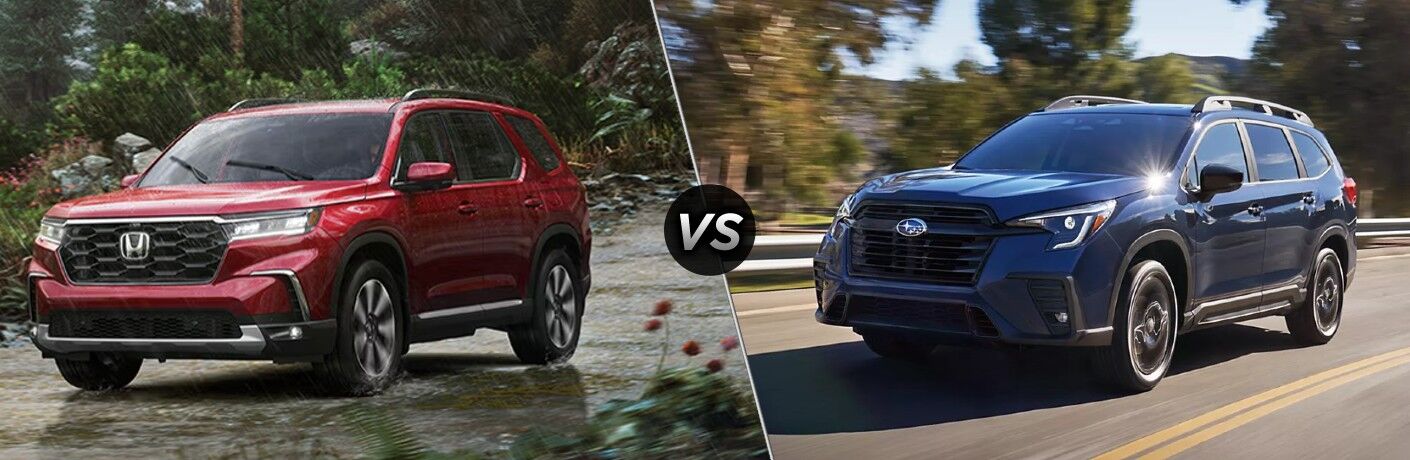
2025_Honda_Pilot_vs._2024_Subaru_Ascent_A_o

2026 Subaru Ascent vs. Honda Pilot | John Kennedy Subaru

2026 Subaru Ascent vs. Honda Pilot: Which Three-Row SUV Fits Your Family? When it's time to find a three-row SUV for the whole family, the Subaru Ascent and the Honda Pilot are two of the most cross-shopped names in the segment. Both offer seating for up to eight, strong towing capability, and genuinely useful family features. But they take different approaches to all-weather capability, power, and everyday practicality. Here's a full breakdown from the team at John Kennedy Subaru of Plymouth Meeting to help you decide which one truly fits your family. Quick Comparison: 2026 Ascent vs. 2026 Pilot Starting MSRP — Ascent: $40,795 | Pilot: $42,395 Standard Engine — Ascent: 2.4L Turbo Boxer, 260 hp / 277 lb-ft | Pilot: 3.5L V6, 285 hp / 262 lb-ft Drivetrain — Ascent: standard Symmetrical AWD on every single trim | Pilot: front-wheel drive standard, AWD optional on Sport/EX-L, standard only from TrailSport up Max Towing — Ascent: up to 5,000 lbs (every trim) | Pilot: up to 5,000 lbs with AWD, only 3,500 lbs with FWD Ground Clearance — Ascent: 8.7 inches | Pilot: up to 8.3 inches (TrailSport) Seating — Ascent: up to 8 passengers | Pilot: up to 8 passengers Max Cargo (rear seats folded) — Ascent: up to 75.6 cu ft | Pilot: up to 87–112 cu ft Standard Safety Suite — Ascent: EyeSight Driver Assist Technology | Pilot: Honda Sensing All-Wheel Drive: The Ascent's Biggest Advantage This is the single most important difference between these two SUVs. Every 2026 Subaru Ascent comes standard with Symmetrical All-Wheel Drive, no exceptions and no upcharge, across all seven trims. The Honda Pilot, by contrast, starts as a front-wheel-drive SUV on its base Sport and EX-L trims, with AWD offered only as a paid option — and even then, FWD Pilot models are limited to 3,500 lbs of towing versus 5,000 lbs with AWD. For Plymouth Meeting and Montgomery County families who deal with real winter weather, that means every single Ascent on the lot is already built for the conditions, while Pilot shoppers have to make sure they're looking at the right trim and drivetrain combination to get the same capability. The Ascent also holds a ground clearance advantage at 8.7 inches, edging out even the Pilot's off-road-focused TrailSport trim at 8.3 inches. Combined with standard X-MODE and Hill Descent Control, the Ascent is built to handle rougher terrain and worse weather right out of the box, on every trim — not just the priciest one. Power and Towing The Pilot's 3.5L V6 does produce more horsepower on paper (285 hp vs. the Ascent's 260 hp), and its smooth V6 character is a genuine strength. But the Ascent's turbocharged boxer engine actually delivers more torque (277 lb-ft vs. 262 lb-ft), which translates to strong low-end pulling power for merging, passing, and towing. Both SUVs top out at a useful 5,000 lbs of towing capacity — but the Ascent reaches that number as standard equipment on every trim, while the Pilot only hits its full 5,000-lb rating once you've added AWD. Space, Safety, and Family Features Subaru positions the Ascent as offering more overall passenger space than several competitors in this class, and it comes standard with EyeSight Driver Assist Technology, along with available features like DriverFocus distraction mitigation and Cabin Connect, which lets the driver talk to third-row passengers without turning around. The Pilot counters with a genuinely spacious cabin of its own, a new-for-2026 12.3-inch touchscreen, and a larger maximum cargo capacity when both rear rows are folded flat — a real advantage for families who occasionally need to haul more gear than passengers. To Be Fair: Where the Pilot Holds Its Own The Pilot isn't without real strengths. Its 285-hp V6 is smooth and refined, its maximum cargo volume beats the Ascent's by a wide margin, and its new 12.3-inch touchscreen is a meaningful upgrade for 2026. The TrailSport trim also offers genuine off-road-oriented hardware and second-row captain's chairs for families who want a slightly different flavor of capability. If maximum cargo space and horsepower on paper matter most to you, the Pilot is a strong, well-rounded choice. The Verdict Both of these three-row SUVs are excellent choices for growing families. But for buyers who want standard all-wheel drive on every trim without paying extra, a higher ground clearance, and full towing capability regardless of which trim you choose, the 2026 Subaru Ascent comes out ahead. The Pilot remains a strong pick for families who prioritize maximum cargo room and V6 smoothness, but if all-weather confidence and standard capability across the entire lineup matter most, the Ascent is the stronger overall package. See the 2026 Subaru Ascent for Yourself Visit John Kennedy Subaru of Plymouth Meeting to test drive the Ascent and see how it compares to the Pilot in person. View Ascent Inventory Schedule a Test Drive Proudly Serving Plymouth Meeting and the Surrounding Communities John Kennedy Subaru of Plymouth Meeting is a convenient stop for Ascent shoppers throughout Montgomery County and the greater Philadelphia area. We're proud to serve drivers from: Plymouth Meeting, PA Norristown, PA East Norriton, PA West Norriton, PA Conshohocken, PA King of Prussia, PA Valley Forge, PA Blue Bell, PA Whitemarsh, PA Ardmore, PA Philadelphia, PA No matter which of these communities you call home, our Plymouth Meeting showroom is just a short drive away. Browse our full new Subaru inventory or visit our homepage to learn more about financing, trade-ins, and current offers. Pricing, specifications, and third-party data referenced above are current as of publication and sourced from Subaru.com, Honda.com, Edmunds, Kelley Blue Book, TrueCar, and Autoblog. Specs and pricing are subject to change by each manufacturer and may not include destination fees, taxes, title, or dealer charges. See John Kennedy Subaru of Plymouth Meeting for current pricing, incentives, and availability.